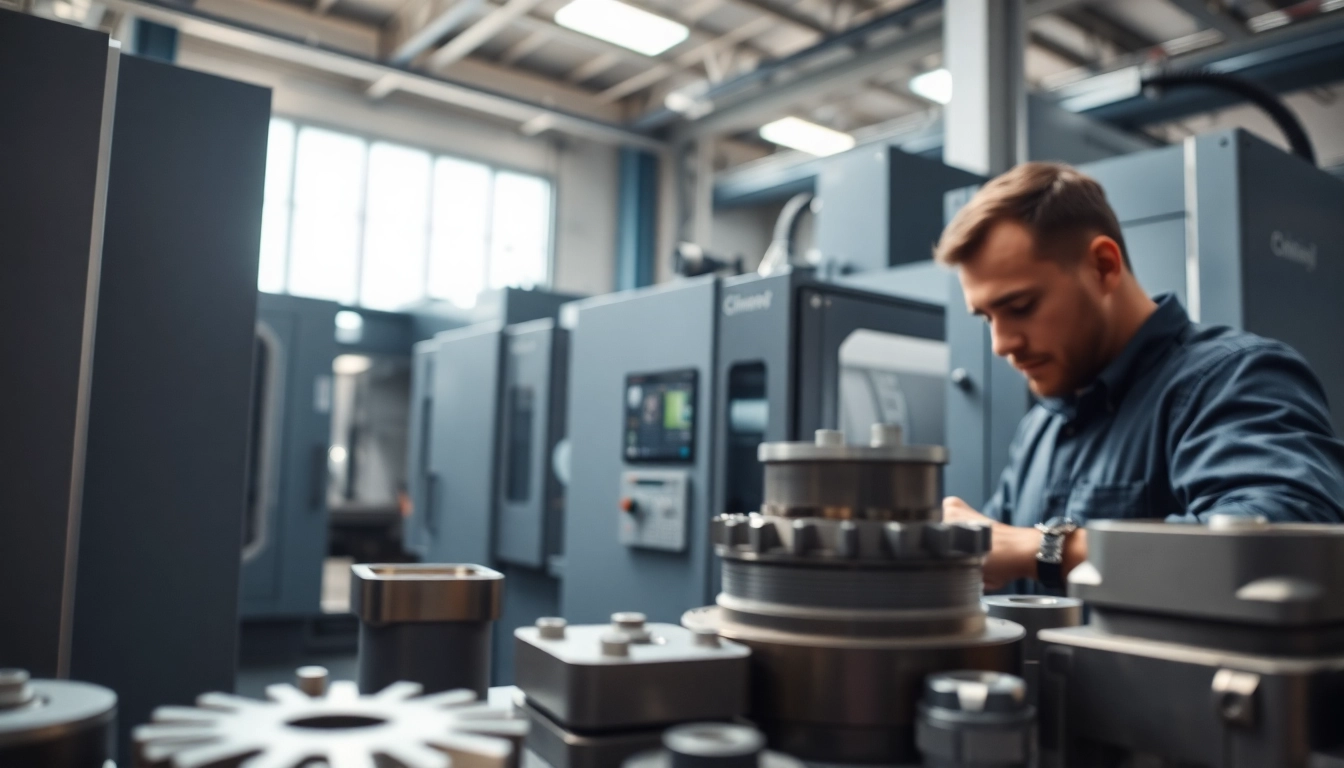
In today’s competitive manufacturing landscape, precision and customization are paramount. This is especially true in the realm of CNC (Computer Numerical Control) machining, where efficiency, accuracy, and adaptability can make or break a project. Chiheng Custom CNC Machining stands at the forefront of this industry, offering tailored solutions that meet exacting standards across various sectors.
Understanding Chiheng Custom CNC Machining
What is CNC Machining?
CNC machining is a manufacturing process wherein pre-programmed computer software dictates the movement of factory tools and machinery. This advanced technology allows for a high degree of precision and the ability to produce complex parts, which are vital in a range of industries, from aerospace to automotive. The precision level in CNC machining can reach up to ±0.005mm, making it one of the most accurate methods of production available today.
Key Benefits of Custom CNC Machining
Custom CNC machining offers several significant advantages:
- High Precision: The ability to manufacture parts with incredible accuracy minimizes waste and reduces costs.
- Flexibility: Custom designs can be easily implemented, allowing for quick adjustments and iterations during the design phase.
- Scalability: Whether you need prototyping or large-scale production, CNC machining can be scaled to meet any demand.
- Material Versatility: CNC machining can work with a wide variety of materials, including metals, plastics, and composites, ensuring that you get the specific features you need.
Industries That Use CNC Machining
Many industries take advantage of CNC machining due to its precision and adaptability:
- Aerospace: Parts for planes and spacecraft require incredibly tight tolerances and rigorous testing.
- Automotive: Custom components improve efficiency and performance in vehicles.
- Medical: Manufacturing of surgical instruments and implants that meet strict regulatory standards.
- Electronics: Precise components for devices that require exact physical specifications.
The CNC Machining Process at Chiheng
From Design to Production
The CNC machining process at Chiheng begins with collaboration on the design phase. Customers are encouraged to submit their designs, which can be created using various CAD software. Chiheng’s experienced engineers review the designs and provide constructive feedback, ensuring that the final output meets both the design intent and functional requirements. Once the design is finalized, it is converted into machine code that guides the CNC machines during production.
Technical Specifications and Precision Levels
Chiheng specializes in achieving precision levels as tight as ±0.005mm, which is often required in critical components like hydraulic systems, medical devices, and aerospace elements. The process leverages advanced machining centers equipped with multi-axis functionality, allowing for intricate cuts and features that would be impossible to achieve with traditional machining methods.
Quality Control Measures in CNC Machining
Quality assurance is critical in CNC machining. At Chiheng, each stage of production undergoes rigorous inspection. This includes:
- In-Process Inspection: Continuous monitoring of the machining process to detect issues early.
- Final Inspection: Involves the use of advanced measuring tools to verify that the parts meet the specified tolerances.
- ISO Certifications: Chiheng adheres to international quality management standards, ensuring consistency and reliability.
Materials Used in Chiheng Custom CNC Machining
Common Materials for Machining
CNC machining can accommodate a variety of materials, each selected based on the specifications of the project. Common materials include:
- Aluminum: Lightweight properties with excellent machinability.
- Steel: Offers strength and durability, commonly used in heavy machinery.
- Plastics: Used for components that need to be lightweight and resistant to corrosion.
- Composites: Ideal for high-performance applications in aerospace and automotive sectors.
Material Properties and Their Importance
Each material has unique properties that play a crucial role in the final product’s performance:
- Tensile Strength: Indicates how much pulling force a material can withstand before breaking.
- Resistance to Corrosion: Critical for parts that are exposed to harsh environments.
- Thermal Stability: Important for components that will be subjected to varying temperatures.
Choosing the Right Material for Your Project
When selecting a material for CNC machining, consider factors like strength requirements, weight constraints, and environmental exposure. Chiheng’s engineers provide expert guidance to help customers make informed decisions based on their specific needs and applications.
Pricing and Cost Factors in Custom CNC Machining
Understanding Pricing Structures
The pricing of CNC machining services generally includes costs for materials, labor, machine time, and tooling. While the prices can vary significantly, transparency is crucial. Chiheng provides detailed quotes that break down these costs, allowing customers to understand where their budget is allocated.
Factors Affecting CNC Machining Costs
Several factors influence the overall cost of custom CNC machining:
- Material Type: Different materials have varying costs and machining requirements.
- Design Complexity: More intricate designs require additional machining time and setup.
- Volume of Production: Larger orders often benefit from economies of scale, reducing the unit cost.
Cost-Effective Solutions at Chiheng
Chiheng is committed to providing cost-effective solutions without compromising quality. By optimizing the machining process, investing in advanced technologies, and offering competitive pricing, Chiheng can help clients achieve their operational objectives while keeping costs manageable.
Frequently Asked Questions about Chiheng Custom CNC Machining
How does custom CNC machining work?
Custom CNC machining starts with a design, which is programmed into a computer. CNC machines then precisely cut, mill or shape materials according to that design, providing high accuracy and repeatability.
What are the common applications for CNC Machining?
CNC machining is widely used in aerospace, automotive, medical devices, electronics, and many other industries requiring precision parts and components.
What is the lead time for custom CNC projects?
Lead times vary based on project complexity and volume. Generally, smaller projects can be completed within a week, while larger or more intricate orders may take several weeks.
Can Chiheng handle large volume orders?
Yes, Chiheng specializes in both small and large volume orders, utilizing advanced tools and machinery to scale production efficiently and meet client demands.
What quality certifications does Chiheng possess?
Chiheng holds several industry certifications, including ISO 9001, which assures customers of its commitment to quality management and continuous improvement.