
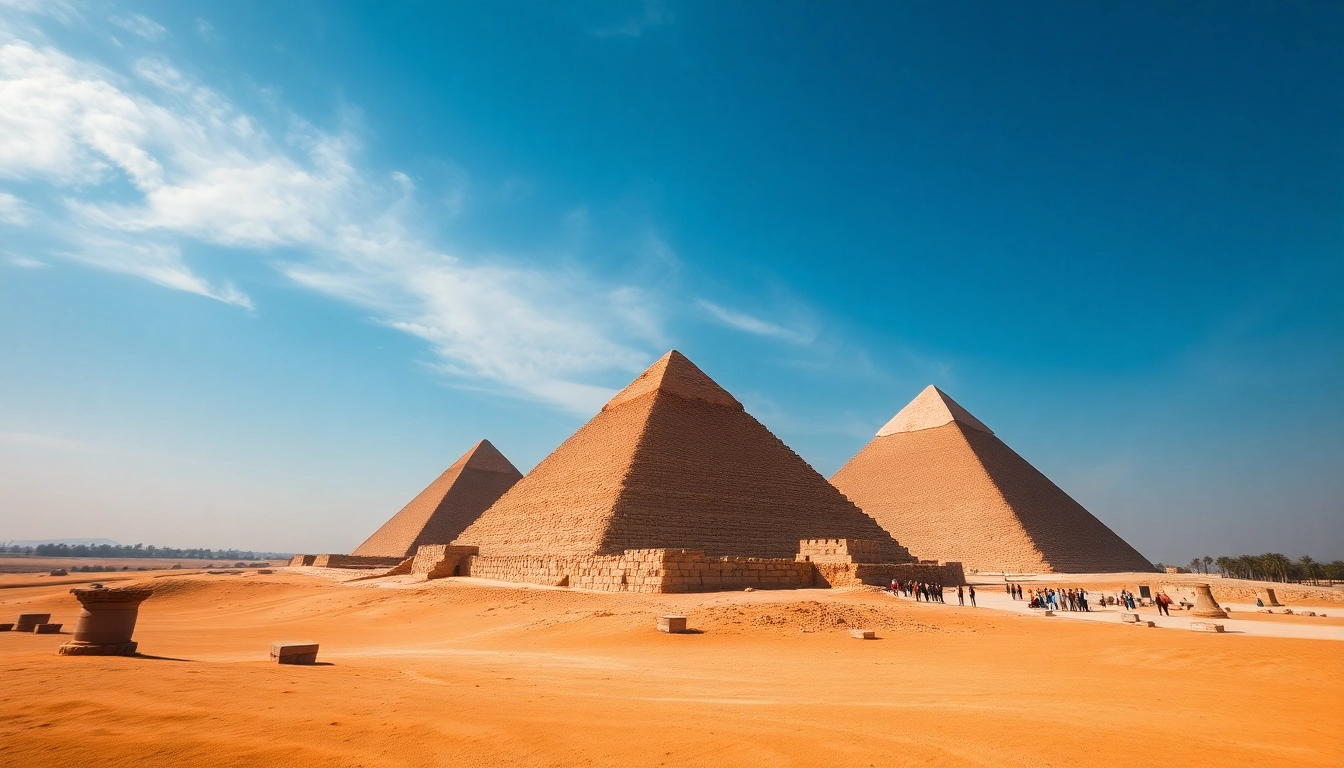
Introduction to the Egyptian Pyramids
The Egyptian pyramids, remarkable feats of engineering and artistry, continue to captivate minds around the globe. Rising majestically from the golden sands of Egypt, these ancient structures serve as tombs primarily for the pharaohs and are embodiments of the profound beliefs held by the ancient Egyptians concerning death and the afterlife. For an in-depth exploration of these astonishing structures, https://piraminds.com/ is a valuable resource.
Understanding their Historical Significance
The historical importance of the Egyptian pyramids cannot be overstated. They represent not only the pinnacle of ancient Egyptian architectural skill but also deep-seated beliefs in the afterlife. The construction of pyramids began in the Third Dynasty with the Step Pyramid of Djoser, designed by the architect Imhotep. These structures became more refined over the centuries, culminating in the iconic pyramids of Giza. The Great Pyramid of Khufu, one of the Seven Wonders of the Ancient World, stands as a testament to the sophistication of ancient Egyptian civilization.
Basic Architectural Features of Pyramids
The architecture of Egyptian pyramids typically consists of a square base and four triangular sides that converge to a single point at the top. This design is not only aesthetically pleasing but also serves practical purposes, including minimizing wind resistance and enhancing stability. The pyramids were often encased in smooth, white Tura limestone, which reflected sunlight, giving them a brilliant appearance. Inside, they often contained complex burial chambers, corridors, and sometimes even hidden passages, reflecting the pharaoh’s status and the belief in the afterlife.
Exploring Key Pyramid Sites in Egypt
While the most famous pyramids are located at Giza, Egypt is home to various significant sites. The Giza Plateau is dominated by the Great Pyramid of Khufu, along with the pyramids of Khafre and Menkaure. Saqqara, another essential site, features the Step Pyramid of Djoser, considered the earliest monumental stone structure. The pyramids of Dahshur, including the Bent Pyramid and the Red Pyramid, provide insights into the evolution of pyramid construction techniques over time.
Pyramid Construction Techniques
Materials Used in Building Pyramids
Construction materials play a critical role in the durability and grandeur of pyramids. The primary materials used were limestone, granite, and mudbrick. Limestone was quarried locally and used extensively for the pyramid’s core and outer casings, while harder granite was imported from Aswan for structural elements such as the king’s chamber. The choice of materials was not merely utilitarian; they also carried symbolic meanings, often aligning with celestial beliefs.
Labor Force Behind the Great Pyramids
Contrary to popular belief, the labor force that built the pyramids was not primarily composed of slaves. Instead, evidence suggests that skilled laborers organized into work crews constructed these monuments. Recent findings indicate that these laborers worked on a rotating basis, possibly to honor the gods and in service of the pharaoh’s eternal life. The existence of workers’ villages and cemeteries near pyramid sites supports this theory, illustrating a well-organized labor force.
Innovative Engineering Methods
The construction of the pyramids illustrates remarkable engineering advancements. Ingenious strategies were employed, including the use of ramps to transport the massive stones. Various ramp designs, such as straight, zigzagging, or circular, have been theorized to facilitate raising heavy blocks. The precision in aligning the pyramids with cardinal points reflects a sophisticated understanding of astronomy and geometry, illustrating the ancient Egyptians’ advanced knowledge in these fields.
Cultural Importance of Pyramids
Pyramids as Tombs and their Symbolism
At their core, the Egyptian pyramids served as elaborate tombs, providing a pathway for pharaohs to ascend to the heavens and achieve immortality. The pyramid’s shape symbolizes the rays of the sun, emphasizing the connection between the pharaoh and the divine. Rituals performed at these sites, including offerings and elaborate burial processes, reinforced their cultural significance as places of worship and reverence for the deceased.
Religious Significance in Ancient Egypt
Pyramids were central to ancient Egyptian religion and the belief system surrounding the afterlife. They served not merely as tombs but as temples for the dead, where ceremonies and offerings were made to facilitate the pharaoh’s journey into the afterlife. The texts inscribed within, such as the Pyramid Texts, provided spells and guidance to navigate the challenges of the underworld, exemplifying the interrelationship between the sacred and the monumental.
Artifacts Found in the Pyramids
Excavations within the pyramids have unearthed numerous artifacts, including pottery, tools, and offerings. These objects were not only meant to accompany the deceased in their journey but also served as evidence of the wealth and status of the pharaoh. Some pyramids, such as the one belonging to Tutankhamun, revealed treasures that offer insights into the artistry and craftsmanship of the time, reflecting the cultural and economic circumstances of ancient Egypt.
Common Myths About the Pyramids
Debunking Myths: Slave Labor vs. Skilled Workers
The myth of pyramid construction relying primarily on slave labor has persisted for centuries but has largely been debunked by modern archaeology. Evidence indicates that the workforce consisted of skilled laborers who were respected for their work. They lived in nearby communities, highlighting a social structure that valued laborers and skilled craftsmen over the idea of forced servitude.
Misconceptions about Pyramid Sizes
Another common misconception relates to the size of the pyramids. While the Great Pyramid of Khufu is indeed the largest, measuring approximately 146.6 meters in height, several other pyramids are also significant in size, including the pyramids of Khafre and Menkaure. Misunderstandings often arise due to the pyramids’ shifting landscapes and the erosion faced over millennia, which can obscure their original dimensions.
Theories on Pyramids’ Alignments and Purposes
The precise alignment of the pyramids with the cardinal points has led to various theories regarding their purpose. While many attribute this to religious and astronomical significance, suggesting that the pyramids served as gateways for the deceased pharaoh to ascend to the stars, others propose that their alignment also reflected the ancient Egyptians’ sophisticated understanding of celestial phenomena. This knowledge would have been crucial for agricultural planning and religious ceremonies.
Preservation and Modern Exploration
Challenges in Preserving Ancient Pyramids
Preserving these ancient structures presents numerous challenges, including environmental degradation, urban encroachment, and the effects of tourism. The harsh climate of Egypt, characterized by high temperatures and sandstorms, can significantly erode the limestone blocks that form the pyramids. Efforts to protect and stabilize these structures must balance the need for preservation with the demands of tourism, which can lead to further wear and tear.
Current Archaeological Discoveries
Recent archaeological discoveries continue to reshape our understanding of the pyramids. Innovative techniques, including ground-penetrating radar and 3D scanning, have revealed previously hidden chambers and structures within the pyramids. These advancements offer insights not only into construction methods but also enrich our comprehension of the cultural practices surrounding burial and the afterlife in ancient Egypt.
The Role of Technology in Pyramid Studies
Technological advancements have revolutionized the study of the pyramids. Remote sensing technologies, digital modeling, and artificial intelligence allow researchers to analyze vast amounts of data, helping to uncover mysteries that have perplexed historians for centuries. Such technologies enable scholars to create detailed models of the pyramids and surrounding structures, facilitating better preservation strategies and historical interpretations.
FAQs
What are the main purposes of Egyptian pyramids?
The Egyptian pyramids primarily served as tombs for pharaohs and were believed to aid in their journey to the afterlife.
How were the Pyramids of Egypt built?
Pyramids were constructed using large limestone blocks, with skilled laborers employing advanced techniques for transport and assembly.
What materials were used in pyramid construction?
Main materials included limestone, granite, and mudbrick, chosen for durability and alignment with cosmic symbolism.
How many pyramids exist in Egypt?
At least 138 identified pyramids have been discovered in Egypt, mainly concentrated in Giza and Saqqara.
Are there any pyramids outside of Egypt?
Yes, pyramids can also be found in other countries like Sudan, where the Nubian pyramids reflect similar architectural styles.