Understanding Bridge Cranes
Bridge cranes are an essential component in many industrial and manufacturing environments, designed to provide efficient material handling across vast spaces. Their versatility allows them to lift and move heavy loads, streamlining workflows and enhancing productivity. For businesses seeking effective lifting solutions, exploring options like the bridge crane can offer insights into optimal designs and configurations.
What is a Bridge Crane?
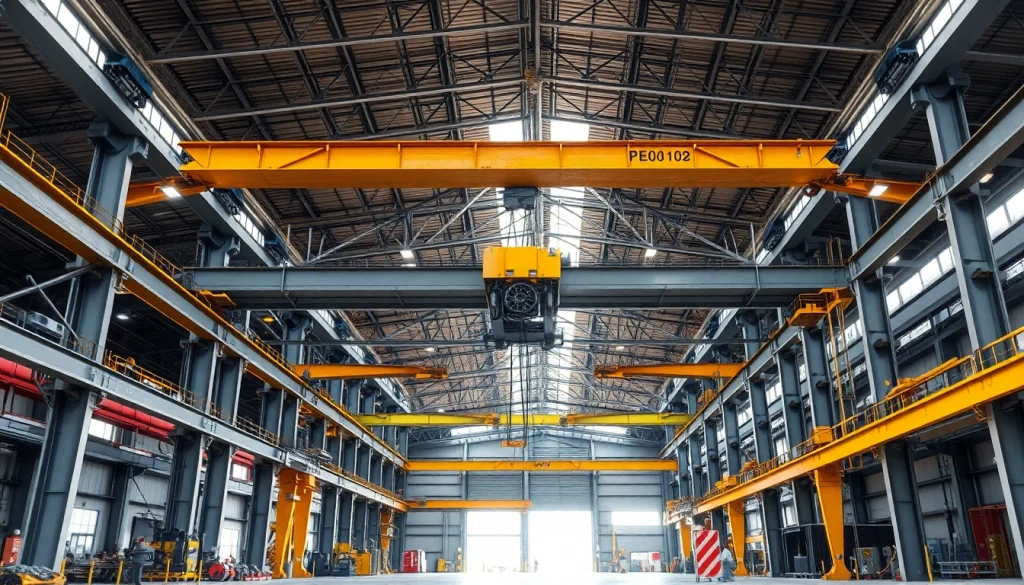
A bridge crane, often referred to as an overhead crane, consists of a hoist that travels along a beam or bridge. This system is typically mounted on rail tracks that span the width of a workspace, allowing for significant movement of materials. The primary advantage of bridge cranes is their ability to utilize overhead space, which is particularly beneficial in environments with limited floor space.
Key Components of Bridge Cranes
Bridge cranes are composed of several key components, each playing a crucial role in their functionality:
- Bridge Beam: The main horizontal component that connects the two runways and supports the hoist.
- Runways: The tracks that support the bridge crane, allowing it to move along the length of the workspace.
- Hoist: The device responsible for lifting and lowering loads, which may be electric or manual.
- Controls: Systems that manage the operation of the crane and hoist, ensuring safe and efficient movement.
Applications Across Industries
Bridge cranes are utilized across a variety of industries, including manufacturing, shipping, automotive, and construction. They are particularly useful in settings that require heavy lifting, such as:
- Factories: For moving components during assembly processes.
- Warehouses: To facilitate the transportation of goods within large storage spaces.
- Shipping Yards: For loading and unloading containers from vessels or trucks.
Benefits of Using Bridge Cranes
Increased Efficiency in Material Handling
Implementing bridge cranes can lead to significant improvements in material handling efficiency. By automating the lifting and moving processes, industries can minimize downtime and streamline operations. Workers can focus on value-added activities rather than manual lifting and transportation tasks.
Cost-Effectiveness and ROI Considerations
While the initial investment in a bridge crane can be substantial, the long-term cost savings often outweigh the upfront costs. By reducing labor expenses and enhancing operational efficiency, businesses can achieve a favorable return on investment (ROI). Furthermore, bridge cranes are often designed for durability, which minimizes maintenance costs over time.
Safety Features and Compliance Standards
Modern bridge cranes are equipped with various safety features to ensure compliance with industry standards. These may include emergency stop buttons, overload protection systems, and safety interlocks. Ensuring that equipment adheres to safety regulations not only protects employees but also safeguards valuable assets and materials.
Choosing the Right Bridge Crane
Factors to Consider in Selection
When selecting a bridge crane, several factors must be evaluated to ensure it meets the specific needs of your operation:
- Load Capacity: Assess the maximum weight that the crane will need to lift.
- Span Length: Consider the distance between the runways, influencing the crane’s reach.
- Operational Environment: Evaluate the conditions where the crane will be used, including temperature and space constraints.
Custom vs. Standard Bridge Cranes
Businesses may choose between custom-designed bridge cranes tailored to specific operational needs and standard models that offer general capabilities. Custom cranes can provide greater efficiency for unique workflows, while standard cranes may offer a cost-effective solution for common applications.
Understanding Load Capacity and Span
Understanding load capacity and span is vital for selecting the right bridge crane. Load capacity refers to the maximum weight a crane can safely lift, while span is the distance between the two runway beams. These specifications determine the crane’s performance and suitability for particular tasks.
Installation and Maintenance Best Practices
Steps for Successful Installation
Proper installation of a bridge crane is crucial for ensuring safety and optimal functionality. Key steps include:
- Conducting a site survey to determine the best location for installation.
- Ensuring the structural integrity of the building to support the crane.
- Collaborating with qualified professionals for precise installation and alignment.
Routine Maintenance Procedures
Ongoing maintenance is essential for the longevity and safe operation of bridge cranes. Regular inspections should include:
- Checking for wear and tear on the hoist and support structures.
- Lubricating moving parts to prevent friction damage.
- Testing safety devices to ensure they are functioning correctly.
Common Issues and Troubleshooting
Common issues with bridge cranes can include operational malfunctions, electrical failures, and wear-related problems. Troubleshooting should encompass:
- Identifying any unusual noises or operational discrepancies.
- Reviewing electrical components for faults or disconnections.
- Consulting the manufacturer’s documentation for guidance on repairs.
Future Trends in Bridge Crane Technology
Innovations on the Horizon for 2025
The bridge crane industry is poised for significant advancements, with innovations aimed at enhancing performance and safety. Emerging technologies such as improved sensor systems and advanced materials may lead to more robust designs that can handle greater loads while consuming less energy.
Automation and Smart Technologies
Automation is likely to play a critical role in the future of bridge cranes. Smart technologies, including IoT connectivity, will facilitate real-time monitoring and predictive maintenance, optimizing performance and reducing downtime. Businesses can leverage data analytics to enhance productivity and streamline operations.
Sustainability in Crane Manufacturing
As industries increasingly focus on sustainability, the crane manufacturing sector is following suit. Innovations aimed at reducing energy consumption and utilizing eco-friendly materials are expected to proliferate. This trend is not only beneficial for the environment but can also lead to cost savings for businesses committed to sustainable practices.