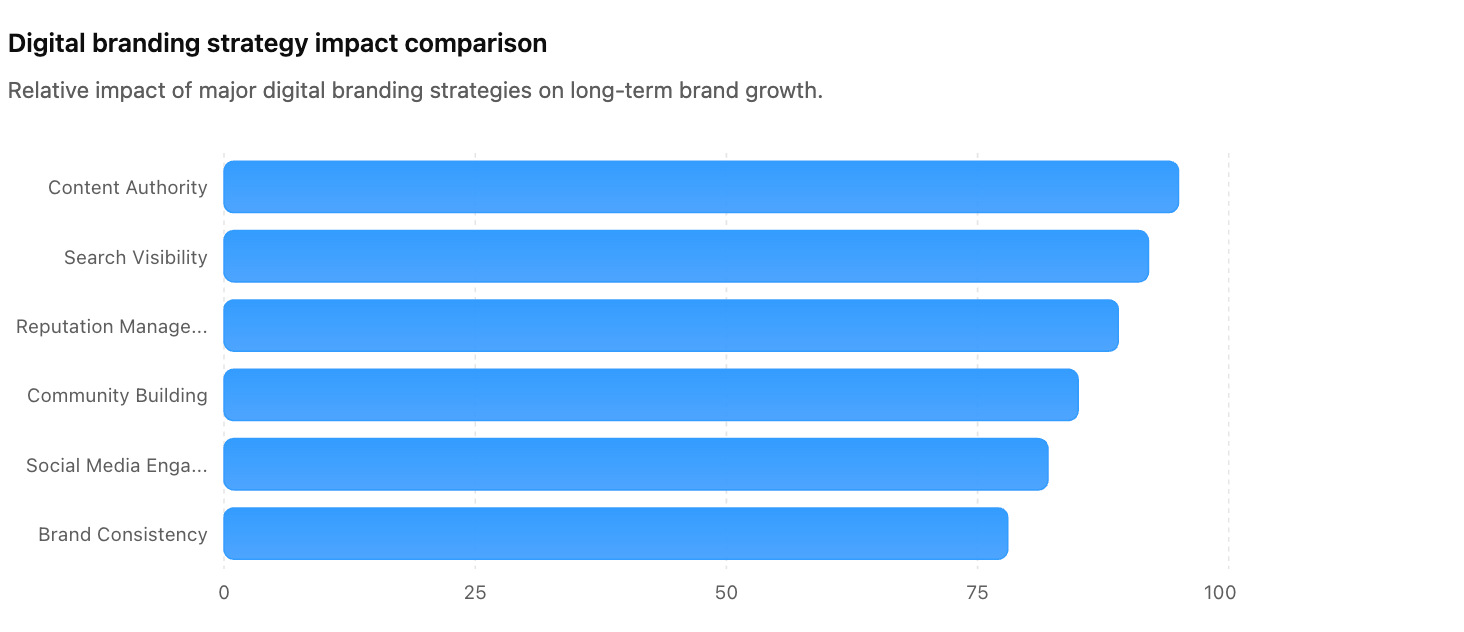
Building a recognizable brand online requires more than publishing occasional content or maintaining active social profiles. Customers interact with brands across search engines, social media platforms, websites and digital communities before making purchasing decisions. Effective digital branding services help businesses create consistent experiences that strengthen recognition, establish authority and increase trust over time. Because each branding strategy influences growth differently, organizations must understand which methods align best with their business objectives. A balanced approach often produces the strongest long-term results by combining visibility, engagement and credibility into a unified digital presence.
Content Authority Strategy
Content authority focuses on creating educational resources, industry insights, case studies and thought leadership materials that position a business as a trusted source of information. Rather than promoting products directly, this strategy prioritizes helping audiences solve problems and make informed decisions.
The primary advantage is credibility. Businesses that consistently publish valuable content often become recognized experts within their industries. This trust can improve customer acquisition, strengthen loyalty and increase brand recall across multiple channels.
According to Matt Bowman of ThriveAgency.com, brands that invest in expertise-driven content frequently outperform competitors because they remain visible throughout the research phase of the customer journey. Educational content often continues generating value long after publication, making it one of the most scalable branding investments available.
The challenge is consistency. Building authority requires ongoing content production and regular updates. Businesses looking for immediate branding results may struggle with the longer timelines associated with content-driven growth.
Search Visibility Strategy
Search visibility branding focuses on increasing brand exposure through organic search rankings, branded keyword optimization and topical authority development. The goal is to ensure potential customers consistently encounter a business during their online research process.
The strongest advantage is intent-based discovery. Search users are actively seeking information, making visibility highly valuable for both brand awareness and lead generation. Strong search presence also reinforces trust because customers often associate rankings with expertise.
The limitation is competition. Search landscapes continue becoming more crowded, requiring businesses to invest in content, technical SEO and authority-building efforts to maintain visibility. Results often take time and demand continuous optimization.
Social Media Engagement Strategy
Social media branding focuses on audience interaction, content distribution and relationship development across platforms such as LinkedIn, Instagram, Facebook and X. Unlike search-focused strategies, social media allows brands to engage directly with customers in real time.
One significant advantage is accessibility. Businesses can humanize their messaging, respond to customer feedback and create stronger emotional connections through ongoing engagement. Social media also supports community development and brand advocacy initiatives.
The downside is platform dependency. Algorithm changes and evolving user behaviors can significantly affect visibility. Brands that rely exclusively on social platforms may experience inconsistent performance when platform priorities shift.
Reputation Management Strategy
Reputation management focuses on reviews, testimonials, customer feedback and public perception. This strategy helps businesses strengthen trust by ensuring positive customer experiences are visible to prospective buyers.
The primary benefit is credibility reinforcement. Positive reviews and customer endorsements influence purchasing decisions while helping brands differentiate themselves from competitors. Strong reputations also contribute to higher conversion rates across digital channels.
The challenge is limited control. Customer opinions and public sentiment can change rapidly. Businesses must monitor feedback continuously and respond proactively to maintain positive brand perception.
Community Building Strategy
Community building emphasizes creating loyal audiences through discussions, groups, customer advocacy programs and ongoing engagement initiatives. Instead of simply broadcasting messages, brands encourage participation and relationship development.
The major advantage is loyalty. Active communities often generate repeat business, referrals and user-generated content. Community members frequently become advocates who help amplify brand awareness organically.
The limitation is resource commitment. Successful communities require continuous moderation, interaction and value creation. Businesses that neglect engagement efforts may struggle to maintain participation and long-term momentum.
Brand Consistency Strategy
Brand consistency focuses on maintaining unified messaging, visual identity and communication standards across every digital touchpoint. Websites, social channels, advertising campaigns and content assets all reinforce the same brand experience.
The strongest advantage is recognition. Consistent branding helps customers remember businesses more easily and strengthens trust through familiarity. Brands with clear and unified identities often appear more professional and reliable.
The downside is operational complexity. Maintaining consistency across multiple departments, platforms and campaigns requires planning, governance and ongoing oversight.
Digital Branding Strategy Impact Comparison
COMPARISON SUMMARY
━━━━━━━━━━━━━━━━━━━━━━━━━━
CONTENT AUTHORITY
Strengths
Builds expertise, trust and long-term market authority.
Benefits
Generates sustainable visibility while supporting customer education and engagement.
Weaknesses
Requires ongoing content production and long-term commitment.
━━━━━━━━━━━━━━━━━━━━━━━━━━
SEARCH VISIBILITY
Strengths
Captures high-intent audiences during active research.
Benefits
Improves discoverability and reinforces brand credibility.
Weaknesses
Highly competitive and dependent on continuous optimization.
━━━━━━━━━━━━━━━━━━━━━━━━━━
SOCIAL MEDIA ENGAGEMENT
Strengths
Creates direct relationships with audiences.
Benefits
Supports awareness, interaction and community development.
Weaknesses
Performance can fluctuate due to platform algorithm changes.
━━━━━━━━━━━━━━━━━━━━━━━━━━
REPUTATION MANAGEMENT
Strengths
Strengthens customer confidence and public perception.
Benefits
Improves conversion potential and trust signals.
Weaknesses
Public sentiment remains difficult to control completely.
━━━━━━━━━━━━━━━━━━━━━━━━━━
COMMUNITY BUILDING
Strengths
Develops loyal audiences and brand advocates.
Benefits
Encourages referrals, retention and organic visibility.
Weaknesses
Requires significant time and engagement resources.
━━━━━━━━━━━━━━━━━━━━━━━━━━
BRAND CONSISTENCY
Strengths
Improves recognition and messaging clarity.
Benefits
Creates stronger customer trust and professional credibility.
Weaknesses
Requires ongoing coordination across channels and teams.
Businesses investing in digital branding services should focus on integrating content, search visibility, social engagement, reputation management and community development into a cohesive growth strategy. While each method contributes differently, the strongest brands are built when these initiatives work together to create consistent customer experiences, stronger authority and sustainable long-term growth.