
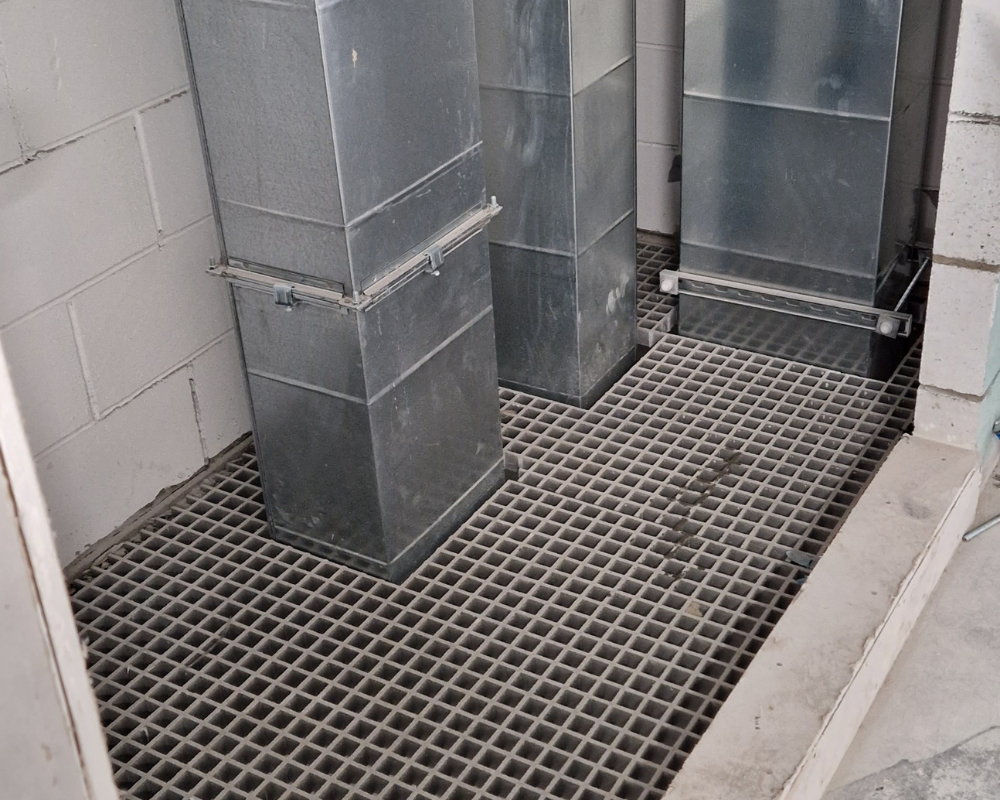
Industrial flooring plays a critical role in ensuring the safety, durability, and efficiency of manufacturing plants, chemical processing units, marine facilities, and many other industrial sectors. Among the wide variety of flooring materials available today, GRP Grating has emerged as a superior choice for industries seeking long-lasting, resilient, and safe flooring solutions. Lightweight yet strong, corrosion-resistant, and highly adaptable, GRP Grating provides a perfect combination of performance and practicality, making it an ideal material for modern industrial flooring needs.
From maintenance platforms and walkways to high-traffic areas in factories, choosing the right flooring material is crucial for ensuring both operational efficiency and worker safety. GRP Grating stands out because it combines the structural benefits of traditional materials like steel with enhanced resistance to harsh industrial environments. In the heart of this discussion, GRP Grating appears as a central solution, providing long-term durability while minimizing maintenance costs and risks.
What is GRP Grating?
GRP Grating, or Glass Reinforced Plastic grating, is a composite material made by combining high-strength glass fibres with thermosetting resin. This composition results in a lightweight, strong, and corrosion-resistant material suitable for industrial use. The glass fibres provide structural integrity, while the resin binds the fibres together, ensuring a solid and durable grating surface.
There are two primary types of GRP Grating:
- Moulded GRP Grating: Designed for areas with high impact or frequent exposure to chemicals and moisture. This type is ideal for walkways and platforms that need excellent durability and safety in wet conditions.
- Pultruded GRP Grating: Known for its higher strength and stiffness, pultruded grating is suitable for longer spans and heavier loads. It is often used in load-bearing platforms and industrial flooring where structural integrity is critical.
Both types are fire-retardant, non-conductive, and low-maintenance, making them highly suitable for demanding industrial environments.
Key Benefits of GRP Grating for Industrial Flooring
The adoption of GRP Grating in industrial applications is growing rapidly due to its remarkable benefits, particularly when compared to traditional flooring materials such as steel or timber.
1. Corrosion Resistance
One of the most significant advantages of GRP Grating is its inherent resistance to corrosion. Unlike steel, which can rust and deteriorate in harsh environments, GRP Grating is immune to chemical attacks, saltwater, and moisture. This makes it an ideal flooring solution for:
- Marine platforms and offshore rigs
- Water treatment plants
- Chemical manufacturing facilities
Industries benefit from a longer lifespan of flooring systems, reduced maintenance costs, and no need for protective coatings or galvanizing.
2. Lightweight Yet Strong
GRP Grating is significantly lighter than steel while maintaining comparable strength. This lightweight property makes it easier to transport, handle, and install, even in elevated or remote areas. Industrial sites benefit from:
- Reduced labor and installation costs
- Safer manual handling for workers
- Flexibility in designing complex platform layouts
This combination of strength and lightness ensures that industrial operations remain efficient without compromising safety.
3. Slip Resistance
Safety is paramount in industrial environments. Many GRP Gratings come with an integrated quartz grit surface that provides excellent anti-slip properties, even in wet, oily, or chemical-prone environments. Key advantages include:
- Reduced workplace accidents
- Compliance with health and safety regulations
- Safer access to elevated platforms, stairs, and walkways
Slip-resistant surfaces are critical for industries like marine, chemical, and food processing, where accidents can be costly and dangerous.
4. Fire Retardancy and Non-Conductivity
GRP Grating can be manufactured using fire-retardant resins, offering an added layer of safety in industrial applications. Its non-conductive nature also makes it ideal for environments with electrical installations or machinery. Benefits include:
- Reduced risk of fire incidents
- Safer working conditions near electrical equipment
- Compliance with fire safety and electrical regulations
These safety features make GRP Grating a reliable choice across industrial sectors where safety cannot be compromised.
5. Low Maintenance and Long-Term Cost Efficiency
Although GRP Grating may have a slightly higher upfront cost than traditional materials, its total cost of ownership is far lower due to minimal maintenance needs. Industries experience savings through:
- No rusting or corrosion
- No painting or galvanizing requirements
- Extended lifespan, often exceeding 20 years
For companies focused on long-term operational efficiency, GRP Grating is a smart and economical investment.
Applications of GRP Grating in Industrial Flooring
The versatility of GRP Grating allows it to be used across various industrial sectors:
- Construction and Infrastructure: Walkways, catwalks, maintenance platforms, and stair treads.
- Water and Utilities: Sewage treatment plants, pumping stations, and chemical tanks.
- Marine and Offshore: Jetties, pontoons, offshore rigs, and docks.
- Rail and Transport: Station platforms, trackside access paths, and maintenance areas.
- Chemical and Manufacturing Industries: Processing areas, production platforms, and high-traffic floors.
In every application, GRP Grating delivers a combination of durability, safety, and cost efficiency unmatched by other materials.
Environmental Advantages of GRP Grating
Sustainability is becoming a key consideration in modern industrial projects. GRP Grating contributes to eco-friendly building practices in multiple ways:
- Long lifespan reduces the need for frequent replacements.
- Low maintenance minimizes the use of harmful chemicals and coatings.
- Lightweight properties reduce fuel consumption during transport and installation.
- At the end of its life cycle, GRP can be recycled into new composite materials.
These environmental benefits make GRP Grating not only an economically wise choice but also a responsible one for companies aiming to meet sustainability goals.
FAQs About GRP Grating
What makes GRP Grating better than steel for industrial flooring?
While steel is strong, it is heavy and prone to corrosion. GRP Grating offers similar strength while being lightweight, corrosion-resistant, slip-resistant, and low-maintenance, making it ideal for industrial flooring.
Can GRP Grating handle heavy industrial loads?
Yes. Pultruded GRP Grating is designed for high-load applications and can be engineered to meet specific span and strength requirements for platforms and walkways.
Is GRP Grating suitable for wet or chemical-prone environments?
Absolutely. GRP Grating’s resistance to moisture, chemicals, and oils makes it highly suitable for marine, chemical, and wastewater applications.
Conclusion
For industrial flooring, GRP Grating stands out as a material that combines strength, safety, and durability with minimal maintenance and environmental benefits. Its corrosion resistance, lightweight design, slip resistance, and fire-retardant properties make it ideal for construction, marine, chemical, and manufacturing industries. Choosing GRP Grating ensures long-term performance, cost efficiency, and enhanced workplace safety, making it the smart solution for modern industrial flooring needs.
By investing in high-quality GRP Grating, industries can enjoy a flooring solution that is safe, reliable, and built to last, ensuring operational efficiency and worker protection for decades to come. We update our homepage regularly with new features and highlights.