
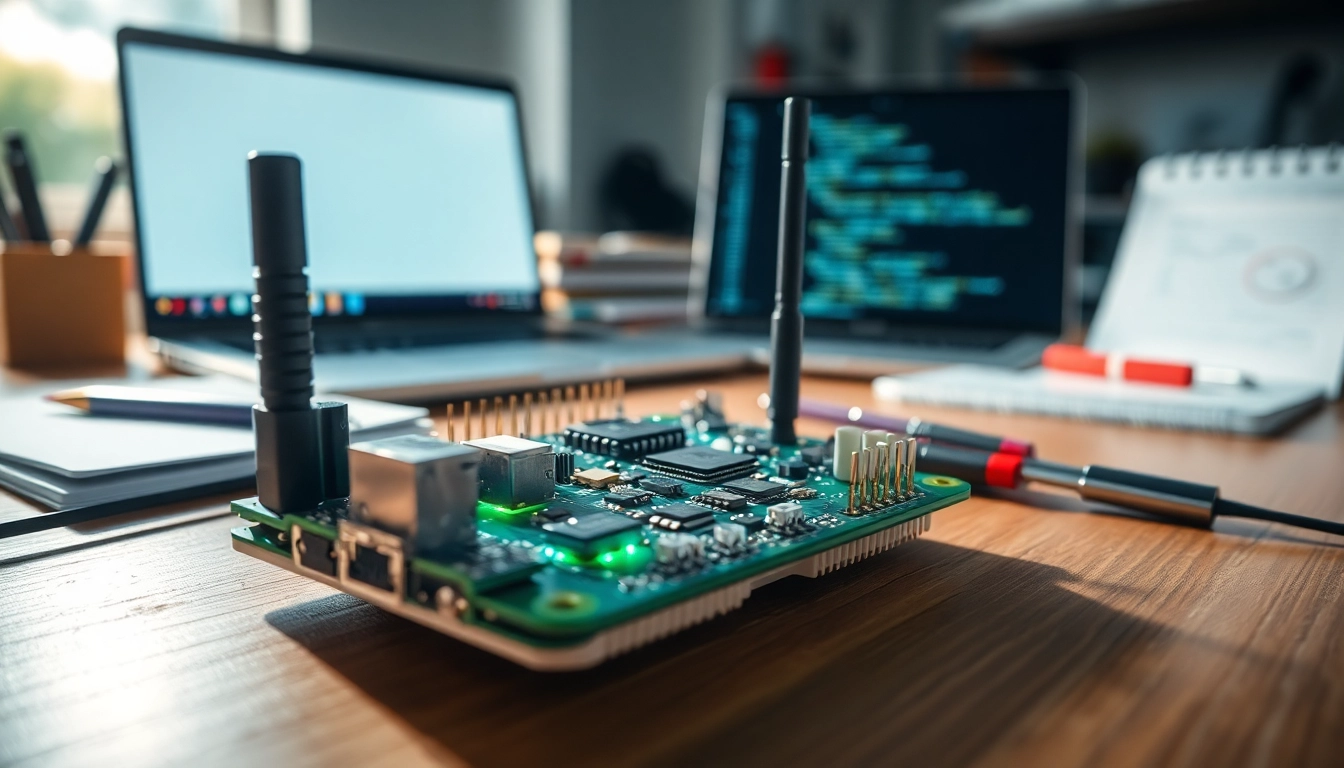
What is a Zigbee Module?
Definition and Key Characteristics
A Zigbee module is a compact and efficient radio module that utilizes the Zigbee protocol to establish wireless communication in various devices and systems. Zigbee is designed for low-power, low-data-rate applications, making it particularly suitable for the Internet of Things (IoT) and automation environments. The key characteristics of Zigbee modules include their ability to provide a reliable mesh networking system, long-range communication capabilities, and low power consumption, enabling devices to operate for extended periods on small batteries.
Comparison with Other Wireless Technologies
When compared to other wireless technologies like Wi-Fi, Bluetooth, and LoRa, Zigbee has unique features that set it apart:
- Wi-Fi: While Wi-Fi supports higher data rates, it consumes significantly more power and has a limited range for battery-operated devices. Zigbee is optimized for lower power and longer battery life.
- Bluetooth: Bluetooth offers a reliable connection for personal devices but usually has a limited range and throughput compared to Zigbee’s mesh capabilities, which allow for wider network coverage.
- LoRa: LoRa excels in long-range communication, but it is not designed for low-latency applications due to its lower data rates. Zigbee is better suited for real-time communications within a local area.
Basic Components of a Zigbee Module
A typical Zigbee module comprises several essential components:
- Microcontroller: A key component that processes data and controls communications.
- Radio Transceiver: Responsible for sending and receiving data over the air using the Zigbee protocol.
- Power Supply: Provides power to the module, typically from batteries in portable applications.
- Antenna: Enhances radio signal transmission and reception.
- Firmware: The software programmed into the module that manages communication protocols and application logic.
Applications of Zigbee Modules in Modern Technology
Smart Home Implementations
Smart homes heavily rely on Zigbee for inter-device communication and control. Zigbee-enabled devices can communicate seamlessly, enabling users to control lighting, heating, security systems, and various appliances from a central hub or a mobile app. With its robust mesh network, a Zigbee system can maintain reliable communication even if some devices go offline, ensuring a consistent user experience. Notably, brands like Philips Hue and Amazon Echo Plus use Zigbee to provide users with a seamless smart home experience.
Industrial Automation Uses
Zigbee modules find widespread use in industrial automation, allowing various sensors and devices to communicate in real-time. These modules can track performance metrics, monitor environmental conditions, and control machinery remotely. The resilience and scalability of Zigbee networks make them ideal for industrial settings, reducing the need for extensive wiring and facilitating easy integration with existing systems. For instance, factories utilize Zigbee for monitoring equipment, streamlining logistics, and enhancing overall operational efficiency.
Health Monitoring Systems
The healthcare sector is increasingly adopting Zigbee technology to create more efficient health monitoring systems. Wearable devices, such as heart rate monitors and glucose meters, can transmit data to medical professionals in real-time. This enables continuous patient monitoring, timely medical response, and better overall health management. Zigbee’s low power consumption is particularly beneficial in these applications, extending the battery life of wearable devices and ensuring the reliability of patient data transmission.
Benefits of Using Zigbee Modules
Energy Efficiency Advantages
One of the standout features of Zigbee is its energy efficiency. Zigbee modules operate on low power, allowing devices to connect and communicate without draining their batteries quickly. This is particularly important in IoT and smart devices that may not have access to a constant power source. By using methods such as low duty cycles to suspend operation when not actively transmitting or receiving data, Zigbee devices can last for years on small batteries, making them more sustainable and cost-effective for end-users.
Scalability for Large Networks
Zigbee’s mesh networking capabilities enable it to scale effortlessly, supporting thousands of devices within a single network. This flexibility is critical for users who plan to expand their smart home, building, or industrial networks over time. Each Zigbee device can act as a node, relaying data to one another, which strengthens the network’s reliability and reach. Consequently, managers can easily deploy hundreds of sensors and controls without worrying about overwhelmed communication lines or signal interference.
Security Features of Zigbee Protocol
Security is paramount in wireless communications, and Zigbee addresses these concerns by incorporating robust security features. Zigbee supports AES-128 encryption, which protects sensitive data transmitted between devices. Additionally, it provides device authentication and message integrity checks to ensure data is not tampered with in transit. Users can therefore trust that their devices and the data they communicate are secure from unauthorized access or cyber threats.
Common Challenges and Solutions in Using Zigbee Modules
Interference Management Techniques
Despite its advantages, Zigbee is not immune to interference from other wireless devices operating on similar frequencies. To mitigate this, engineers can implement various techniques such as frequency hopping, where the Zigbee devices change channels to avoid interference dynamically, and channel scanning, which allows devices to identify and utilize the optimal frequencies for communication. Understanding environmental factors that may introduce interference, such as physical obstructions or competing signals, is crucial for ensuring effective performance.
Range Limitations and Solutions
The range of Zigbee modules can be a limiting factor, particularly in larger installations. However, this can be addressed using repeaters or range extenders to amplify the signal between nodes, creating a more extensive mesh network. Additionally, strategically placing Zigbee devices to optimize their line-of-sight can improve communication distances. Designers must plan the physical layout of Zigbee networks carefully to enhance their efficiency and effectiveness.
Integration with Other Protocols
Many applications require interoperability between Zigbee and other protocols such as Wi-Fi or MQTT. Bridging these protocols typically involves using gateways that translate data formats and communication methods, allowing devices to communicate across different networks. Platforms like SmartThings and Hubitat offer solutions for seamless integration, enabling diverse devices to work in tandem, regardless of the underlying connection technology.
Future Trends in Zigbee Technology
Advancements in Zigbee Standards
The Zigbee Alliance continues to enhance the protocol to adapt to the evolving technology landscape. Recently, Zigbee 3.0 introduced features aimed at achieving greater interoperability between devices, which further solidifies its position as a preferred choice for IoT applications. Future advancements may also include improvements in energy efficiency, data transmission speeds, enhanced security protocols, and greater support for diverse device types.
Emerging Use Cases
As Zigbee technology progresses, new applications are emerging beyond traditional smart homes and industrial uses. For example, smart city implementations are beginning to utilize Zigbee for managing lighting, waste collection, and environmental monitoring. Similarly, agriculture is seeing the adoption of Zigbee modules in precision farming operations, where they can assist in monitoring soil conditions and automating irrigation systems.
Integration with IoT Ecosystems
With the push towards comprehensive IoT ecosystems, Zigbee is increasingly integrating with other emerging technologies such as AI and machine learning. This integration allows for more intelligent decision-making processes in automated systems by analyzing data collected from Zigbee devices to optimize performance and resource allocation. The ability to gather and interpret data from various sources will enhance user capabilities across multiple sectors, promoting smarter, more efficient resource management.