
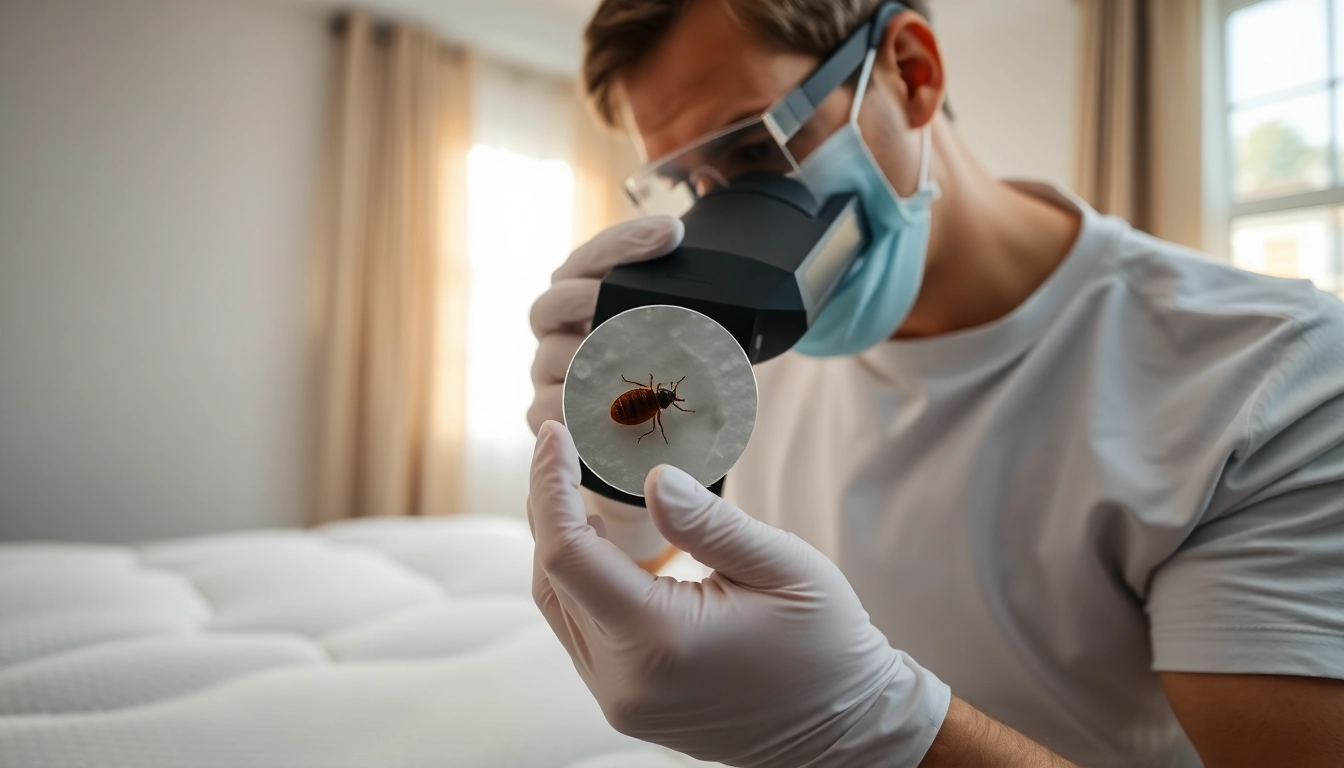
Understanding Bed Bugs and Their Habits
What Are Bed Bugs?
Bed bugs are small, brownish insects that feed on the blood of humans and animals while they sleep. Ranging from 1 to 7 millimeters in size, these parasitic pests are flat and oval-shaped, making them adept at hiding in cracks and crevices. They are nocturnal creatures, primarily active during the night, which makes them difficult to spot until a significant infestation occurs. Bed bugs reproduce rapidly, laying hundreds of eggs in their lifetime, which contribute to their status as a formidable pest in residential settings.
Common Signs of Infestation
Identifying a bed bug infestation early is essential for effective control. Key signs include:
- Bitten skin: Small, red, itchy welts typically appear on areas of the body exposed during sleep.
- Blood stains: Tiny blood spots on bed sheets or mattresses can indicate bed bug activity.
- Fecal spots: Dark specks, often found on linens and walls, indicate the presence of bed bugs.
- Eggs and shed skins: Finding tiny eggs or skins in hiding places can confirm an infestation.
How Bed Bugs Spread
Bed bugs are notorious hitchhikers. They spread primarily through contact with infested items, such as luggage, furniture, and clothing. Shared living spaces like hotels, dormitories, and apartments are particularly vulnerable to infestations. Once inside, they can quickly spread to neighboring rooms or units, complicating extermination efforts.
Why Hire a Bed Bug Exterminator?
Benefits of Professional Extermination
Engaging a professional bed bug exterminator offers several advantages:
- Expertise: Trained exterminators have in-depth knowledge of bed bug behavior and effective treatment methods.
- Tools and Techniques: Professionals utilize specialized equipment and chemicals that are not available to the public, enhancing the efficacy of their treatments.
- Comprehensive Solutions: Exterminators conduct thorough inspections, identify all areas of infestation, and offer long-term prevention strategies.
- Time Efficiency: Hiring an expert can save homeowners considerable time and effort, allowing them to focus on other important matters.
What to Expect During an Inspection
During an initial inspection, the exterminator will evaluate various aspects of your home, including:
- Sleeping Areas: The inspector checks mattresses, box springs, and bed frames for signs of bed bugs.
- Furniture and Upholstery: Sofas and chairs are examined for fecal stains and shed skins.
- Outdoor Areas: The exterior of the property may also be inspected for potential entry points.
Following the inspection, the exterminator will discuss findings and recommend a tailored treatment plan based on the severity of the infestation.
Common Myths About Exterminators
There are several myths surrounding bed bug extermination that can prevent homeowners from seeking help:
- Myth 1: Bed bugs are caused by poor hygiene. In reality, bed bugs can infest any home, regardless of cleanliness.
- Myth 2: Regular pesticides are effective against bed bugs. Most over-the-counter pesticides are ineffective against bed bugs and can exacerbate the problem.
- Myth 3: Professionals are too costly. When compared to the expenses incurred through prolonged infestations, professional treatments can save money in the long run.
Choosing the Right Bed Bug Exterminator
Key Qualities to Look For
When searching for a competent exterminator, consider these key qualities:
- Certification and Training: Look for companies that employ certified pest control technicians trained specifically in bed bug management.
- Experience: A reputable exterminator should have extensive experience dealing with bed bug infestations, preferably documented through case studies or testimonials.
- Approach to Extermination: Ensure they utilize integrated pest management (IPM) practices, which combine various treatment methods for more effective results.
Questions to Ask Potential Exterminators
Before hiring an exterminator, ask the following questions to gauge their expertise:
- What are your methods for detecting and treating bed bugs?
- Are your exterminators licensed and insured?
- What warranties or guarantees do you provide for your services?
- Can you provide references from previous clients?
Reading Reviews and Testimonials
Reading reviews can offer invaluable insights into a company’s reliability and effectiveness. Look for:
- Overall Ratings: High ratings typically reflect customer satisfaction.
- Specific Feedback: Pay attention to reviews discussing the thoroughness and professionalism of the service.
- Response to Complaints: A good company will address negative feedback and offer solutions to dissatisfied customers.
Bed Bug Extermination Methods
Integrated Pest Management (IPM)
IPM is a holistic approach to pest management that involves multiple strategies:
- Inspection: Regular monitoring helps catch infestations early.
- Identification: Correct identification is crucial for choosing the right treatment.
- Prevention: Implementing measures to stop bed bugs from entering your home.
- Control: Employing both chemical and non-chemical methods to eliminate pests.
Heat vs. Chemical Treatments
Exterminators often utilize a combination of heat and chemical treatments based on the situation:
- Heat Treatment: This method involves raising the temperature of infested areas to a level lethal to bed bugs, often reaching 120°F.
- Chemical Treatment: Professionals may use targeted insecticides that are effective but require specific handling to ensure safety.
Consultation with a professional can help identify the most suitable method for your particular situation.
Post-Treatment Follow-Up
Post-treatment follow-up is crucial for ensuring complete eradication. Exterminators may schedule follow-up visits to:
- Monitor for any returning signs of bed bugs
- Provide additional treatments if necessary
- Offer advice on preventive measures to avoid reinfestation
Prevention Tips After Treatment
How to Prevent Future Infestations
Taking proactive measures can significantly reduce the likelihood of a bed bug return:
- Regular Inspections: Conduct frequent checks of sleeping areas and furniture for early signs of bed bugs.
- Proper Cleaning: Regularly wash bedding and vacuum furniture to minimize hiding places.
- Travel Precautions: Inspect luggage and hotel rooms before settling in to prevent bringing pests home.
Regular Inspection Techniques
Regularly inspecting the home can significantly aid in early detection:
- Use a flashlight: Check seams and folds of mattresses and luggage for visible bed bugs or eggs.
- Monitor for bites: Keep track of any unexplained bite marks, which could indicate an infestation.
Maintenance Tips for a Bed Bug-Free Home
To maintain a bed bug-free environment, consider the following practices:
- Seal Cracks and Crevices: Use caulk to seal cracks in floors and walls, which can serve as entry points.
- Use Protective Covers: Encase mattresses and box springs in protectors that can trap any existing bugs and prevent new ones from entering.
- Be Mindful of Secondhand Items: Thoroughly inspect and clean items before bringing them into your home.
Frequently Asked Questions (FAQs)
What are the first signs that indicate I have bed bugs?
The first signs often include small, itchy bite marks on your skin, blood stains on your sheets, and dark fecal spots on your mattress.
Can I treat a bed bug infestation myself?
While DIY treatments are possible, they are often ineffective. A professional bed bug exterminator can provide thorough solutions that are more likely to eliminate the pests.
How long does the extermination process take?
The duration of extermination can vary based on the size of the infestation and the methods used, but treatments typically last a few hours with follow-ups scheduled as needed.
Are bed bug treatments safe for my family and pets?
Reputable exterminators use safe pest control methods designed to minimize risks to humans and pets, but it’s crucial to follow their guidance on re-entering treated areas.
How can I prevent bed bugs from returning?
Prevent bed bugs from returning by maintaining cleanliness, conducting regular inspections, and being cautious when traveling or bringing secondhand items into your home.